Posts

Sufism And The Two Truths

Filed under Buddhism, Metaphysics, Religion, Spirituality, Sufism

Blue sky with clouds

Two key concepts in Sufism are ‘fanaa’ and ‘baqaa’ meaning annihilation and subsistence in Allah. These root words appear in the Qurʾān. “Everyone upon the earth will perish (fānin), and there will remain (yabqá) the Face of your Lord, Owner of Majesty and Honor.” (Surat al-Rahman 55:26-28). In Sufism, ‘fanaa’ refers to the annihilation of the individual ego or self (’nafs’) in Allah and ‘baqaa’ refers to whatever is left, remains, or subsists once the ego has been annihilated. In this short piece I want to use the Mahayana Buddhist doctrine of the two truths to help explore the concepts of ‘fanaa’ and ‘baqaa’.

Continue reading → · 2 comments

Metaphysics of Light

Filed under Islam, Spirituality, Sufism

Aurora-worlds_1427194i

Before light there was Light - invisible, previsible. Moses asked to see the Light but how could he see with eyes? Light beyond light, Light beyond eyes.

Light’s mercy was to create shadow so that we might see light - a pale, obscure, wavering reflection.

Light’s mercy was to create eyes so that we might see yellow, red and blue. Light’s mercy was to create green so that we might see Beauty.

Continue reading → · 1 comment

Sufism and Quakers

Filed under Islam, Religion, Spirituality, Sufism

Quaker meeting

Quaker meeting

I am a Muslim who sometimes attends my local Quaker meeting. In England, Quaker meetings offer unstructured worship where one sits in silence until someone feels moved to speak. In my local meeting I can generally enjoy 30 mins of silent meditation or dhikr until someone speaks. In the silence, Quakers wait on God “as if none were present but the Lord” and the metaphors they commonly use to describe God are spirit and light, which map to the Sufi concepts of ruh and noor.

Continue reading →

The role of conceptuality and reason on the spiritual path

Filed under Buddhism, Islam, Metaphysics, Philosophy, Psychology, Religion, Spirituality, Sufism

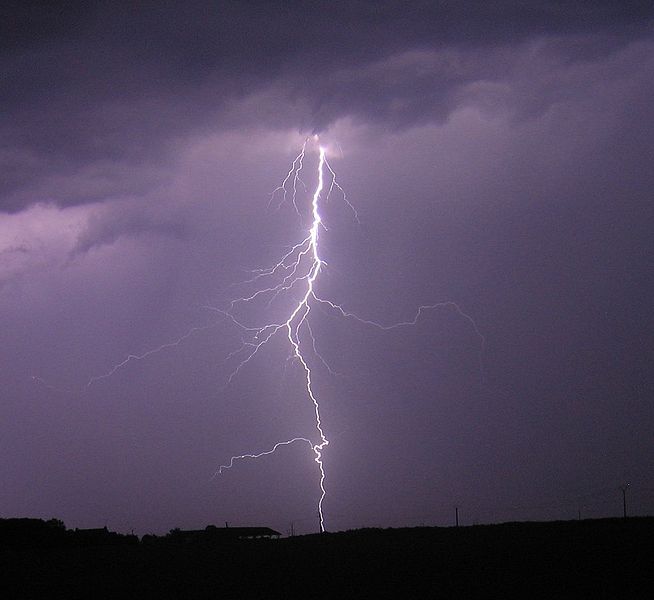
Lightning

Lightning

I want to offer a perspective on conceptuality and reason on the spiritual path. I will mainly draw on Buddhist source material, but will also include some references to Sufi Islam. In his ‘Root Text on the Mahamudra’, the first Panchen Lama, Losang Chökyi Gyaltsän, says

“The mind that is free from conceptualization Is merely a level of conventional mind; It is not the mind’s ultimate nature. Therefore seek instruction from qualified Masters.”

Continue reading → · 1 comment

the manifestation of the Real

Filed under Islam, Metaphysics, Spirituality, Sufism

“Ibn al-‘Arabî and his followers refer constantly to the fact that all of creation is but the outward manifestation (zuhûr), theophany (tajallî), or effusion (fayd) of God. Every single thing in the whole of existence is a form (sûrah) or a locus of manifestation (mazhar, majlâ) within which one or more of the Attributes display themselves. Ultimately, each individual thing manifests its own reality (haqîqah), immutable entity (‘ayn thâbitah), meaning (ma’nâ), or quiddity (mâhiyyah). These four synonymous terms refer to the “nonexistent objects of God’s Knowledge” (al-ma’lûmât al-ma’dûmah), i.e., the things (ashyâ’) as they are known in divinis by God Himself before their creation.

Continue reading →

The Politics of the Soul

Filed under Metaphysics, Philosophy, Politics

THE POLITICS OF THE SOUL - JOHN MILBANK - PAPER PRESENTED TO THE TEMENOS ACADEMY - 1st November 2012

This is my remembrance / reworking of some of the many ideas in Prof Milbank’s paper.

Prof. Milbank started by stating that the soul (psyche) is what makes us human, it is the human realm par excellence. He cited Aristotle’s ideas from De Anima, talking about the bodies of humans and animals being the nature of their souls, and yet the soul as transcending mere matter.

Continue reading → · 1 comment

Tell Me What I Want, What I Really Really Want

Filed under Islam, Metaphysics, Religion, Spirituality, Sufism

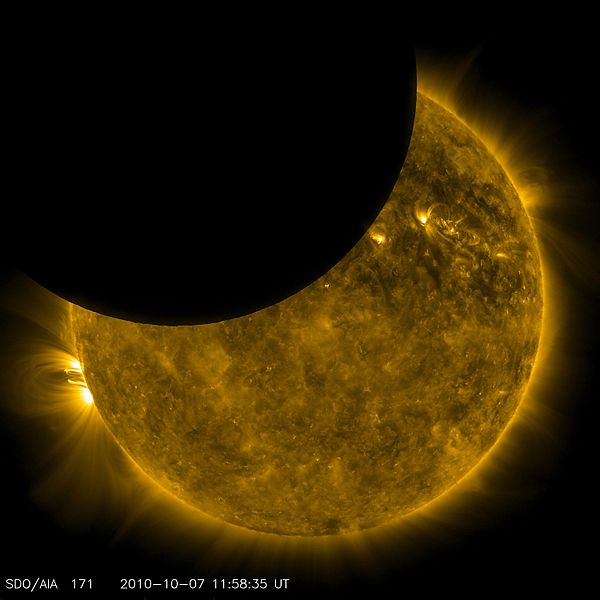
600px-Sun_and_Moon

Sun and Moon

Knowing what we and others truly want is an important part of self-knowledge (1). The phrase ‘know thyself’ was carved into the temple at Delphi. However, the humanism of the modern and post-modern world has led to a novel quest for self-knowledge that places the human being at the centre, not God. “The post-modern definition of the human subject is frail and shifting” (2). The Enlightenment project has collapsed under its own weight - there is no ‘internal arbiter’ that can support its weight. It is no longer an intellectual project; it has degenerated into consumerism and commercialisation. How do we know what we want without an internal arbiter? Modernity encourages us to want a plethora of things. “What do I want?” can be difficult to answer. There is little consensus among people about what they want and what is good for society. How far can the human subject stretch and bend before it breaks? We are now so far away from the natural order. Technology is a method to avoid experiencing the world and nature. For example, central heating allows to avoid experiencing cold in winter.

Continue reading →

Art and Creativity in Islam

Filed under Islam, Religion, Spirituality, Sufism

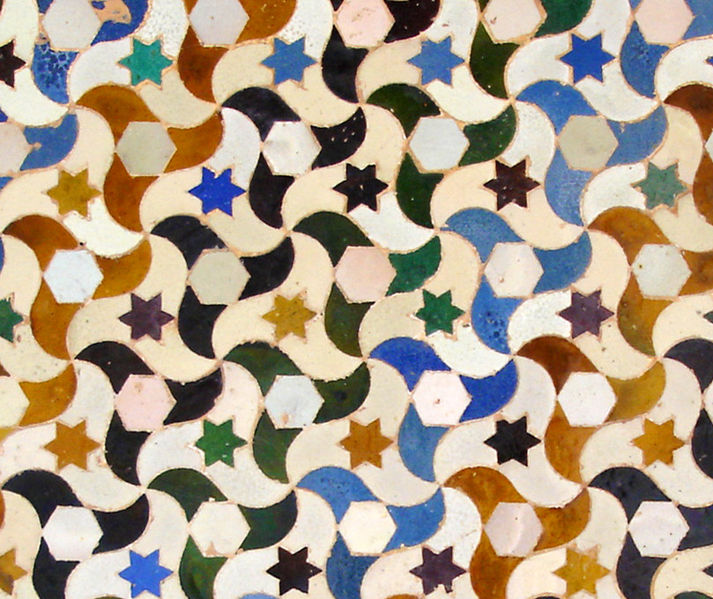
713px-Alhambra-p3-closeup

Tile from the Alhambra, Granada, Spain

Islam places creativity and art at the centre of human existence. Everything humans produce has an aesthetic quality, even the way we drive or speak. Art is the ability to generate beauty and we can all be artists in whatever we do, by doing it beautifully. This is ihsan. For example, our relationships need the quality of ihsan. Sound relationships are creative, and are based on the recognition of others’ souls. Human beings are the summit of creation, not to exploit others but to help the rest of creation to flourish. The Muslim as khalifa is a gardener, an artist, a carer of ophans. If we behave in these beautiful ways we will naturally embue our surroundings with beauty, just as the “classical mosques were built in the form of peoples’ souls” (1) as natural expressions of beauty rather than deliberate artistic creations.

Continue reading → · 1 comment

Political Vacuum

Filed under Politics

In the ‘Nicomachean Ethics’ Aristotle writes: “If, then, there is some end of the things we do, which we desire for its own sake (everything else being desired for the sake of this), and if we do not choose everything for the sake of something else (for at that rate the process would go on to infinity, so that our desire would be empty and vain), clearly this must be the good and the chief good. Will not the knowledge of it, then, have a great influence on life? Shall we not, like archers who have a mark to aim at, be more likely to hit upon what is right? If so, we must try, in outline at least, to determine what it is, and of which of the sciences or capacities it is the object. It would seem to belong to the most authoritative art and that which is most truly the master art. And politics appears to be of this nature; for it is this that ordains which of the sciences should be studied in a state, and which each class of citizens should learn and up to what point they should learn them; and we see even the most highly esteemed of capacities to fall under this, e.g. strategy, economics, rhetoric; now, since politics uses the rest of the sciences, and since, again, it legislates as to what we are to do and what we are to abstain from, the end of this science must include those of the others, so that this end must be the good for man. For even if the end is the same for a single man and for a state, that of the state seems at all events something greater and more complete whether to attain or to preserve; though it is worth while to attain the end merely for one man, it is finer and more godlike to attain it for a nation or for city-states. These, then, are the ends at which our inquiry aims, since it is political science, in one sense of that term.”

Continue reading →

Impractical Spirituality

Filed under Islam, Spirituality

babys_breath

The spirit is impractical. The spirit is of no use. It cannot be used. Any attempt to use the spirit contravenes its nature. Impractical spirituality is based on this recognition. Rather than try to use the spirit, impractical spirituality enjoys the beauty of spirit for its own sake.

To directly seek practical applications of the spirit such as ‘spirituality in the workplace’ is to miss the point. Sure, we can appreciate the beauty of the spirit anywhere: in the home, workplace, in the car, or on a plane – but attempts to put the spirit to use in those places are like trying to form water into a chair.

Continue reading →