Posts

Post-Modern Religion

Filed under Buddhism, Religion, Spirituality

Modernism_to_Postmodernism_Passage

Passage from modern to post-modern era according to Hiroki Azuma in "Génération Otaku - Les enfants de la postmodernité"

I would like to compare attitudes to religion across three periods of history: the traditional period, the modern period, and the post-modern period. Religions are generally associated with the traditional period, when they held sway, whereas the modern period is characterised by religion’s loss of dominance. It should be noted that different people, countries and areas of the world are at different points in the cycle: even within the same city it is possible to find modern and even post-modern people living in close proximity with traditional people.

Continue reading → · 3 comments

Spiritual Constrictions

Filed under Religion, Spirituality

Celtic_Gold-plated_Disc%2C_Auvers-sur-Oise%2C_Val-d%27Oise_%28Detail_02%29

Based on the Taoist notion of Yin-Yang, I would like to introduce the idea of a ‘Yin’ constriction. (Please bear with me if you are already familiar with the basic concepts). Yin and Yang represent the two different aspects of the cosmos (similar to Jamal and Jalal in Islam). Yin and Yang have many different characteristics, which are all essentially relative, so I am not talking in absolutes here. In relation to each other, Yin is passive and Yang is active, Yin is yielding and Yang is penetrating, Yin is unstructured and Yang is structured, and Yin is soft and Yang is hard. As the popular Yin-Yang symbol suggests, cosmic balance is achieved when Yin and Yang are in balance with each other, and neither predominates overall.

Continue reading →

Recipe for Spanish Omelette (Tortilla Española)

Filed under Cooking

IMG_0141

tortilla española

Ingredients:

  • 1 large onion
  • 3-4 medium potatoes. Waxy potatoes such as Maris Piper work best
  • 5 large eggs
  • 4 tablespoons olive oil
  • sea salt
IMG_0140

tortilla española

Equipment:

  • Medium-large, non-stick frying pan with a lid (a plate will do)
  • Medium-large mixing bowl
  • Two warm plates

Method:

  1. Slice the onion and potatoes thinly.
  2. Fry the onions and potatoes for around 20 mins on a low heat in a covered frying pan in 3 tablespoons of olive oil. Stir occasionally.
  3. Season the potato and onion mixture well during cooking.
  4. Check the potatoes are soft - on the verge of breaking up.
  5. Break the eggs into a mixing bowl and gently beat. Season.
  6. Add the hot onion and potato mix to the eggs in the mixing bowl. Mix.
  7. Add the remaining 1 tablespoon of olive oil to the empty frying pan. Turn up the heat to medium.
  8. Pour the egg, potato and onion mixture into the pan. Turn the heat down to very low.
  9. Cook the mixture for about 15 minutes, until it is no longer runny on the top.
  10. Covering the frying pan with the lid or a plate, carefully turn the pan over, so that the omelette rests on the lid or plate. (I do this over the sink in case of an accident.)
  11. Put the frying pan back on the heat, and carefully return the omelette to the pan, with the cooked side now facing up.
  12. Cook the omelette for a further 6 minutes on a low heat until the other side is done.
  13. Tip out or invert the cooked omelette onto a clean, warm plate.
  14. Cover with a second warm plate to keep the omelette warm until ready to serve.

Enjoy with crusty bread!

Continue reading →

The Concept of 'Geist'

Filed under Spirituality

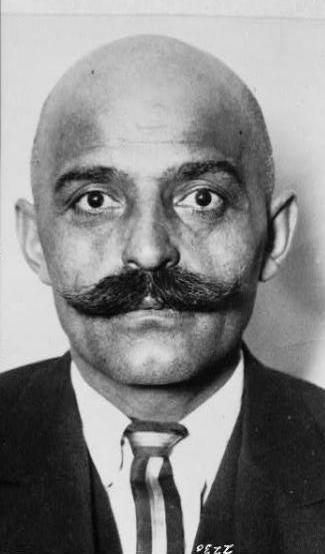
Georges_Gurdjieff

Gurdjieff

The concept I want to introduce is the Hegelian concept of ‘Geist’. When talking at a macro level about the rise and fall of civilisations or empires, the concept of Geist can be illuminating.

The point is that all national, religious and organisational success factors that can be identified by conventional study are secondary factors, the manifestations of Geist. The primary cause of success is Geist itself and the secondary factors are, in a sense, incidental. Even if an organisation possesses many of the factors that have made other organisations successful in the past, it will not be successful without Geist.

Continue reading →

The Bloom On Fruits

Filed under Economics

Most men, even in this comparatively free country, through mere ignorance and mistake, are so occupied with the factitious cares and superfluously coarse labors of life that its finer fruits cannot be plucked by them. Their fingers, from excessive toil, are too clumsy and tremble too much for that. Actually, the laboring man has not leisure for a true integrity day by day; he cannot afford to sustain the manliest relations to men; his labor would be depreciated in the market. He has no time to be anything but a machine. How can he remember well his ignorance – which his growth requires – who has so often to use his knowledge? We should feed and clothe him gratuitously sometimes, and recruit him with our cordials, before we judge of him. The finest qualities of our nature, like the bloom on fruits, can be preserved only by the most delicate handling. Yet we do not treat ourselves nor one another thus tenderly. Some of you, we all know, are poor, find it hard to live, are sometimes, as it were, gasping for breath.

Continue reading →

Kashmiri Sufism and the Yogini Lal Ded

Filed under Religion, Sufism

LalDed

Yogini Lal Ded

The two founding figures of Kashmiri Sufism are Sheikh Nooruddin Noorani (1377 - 1440 CE) and Sheikh Ali Hamadani (1314 - 1384 CE). Both of them are said to have encountered a female Hindu yogini called Lal Ded (1320 - 1392 CE) who was in the habit of wandering around naked.

One story of Lal Ded mentions how she was teased by a number of children. A nearby cloth merchant scolded the children for their disrespect. Lal Ded asked the merchant for two lengths of cloth, equal in weight. That day as she walked around naked, she wore a piece of cloth over each shoulder and, whenever she was met with respect or scorn, she tied a knot in one or other cloth. In the evening, she brought the cloths back to the merchant, and asked him to weigh them again. Both cloths were equal in weight no matter how many knots were in each, showing that respect and scorn have no weight of their own.

Continue reading →

Oneness

Filed under Buddhism, Sufism

Ebne_arabi

Muhyiddin Ibn Arabi

In the Beshara translation of ‘Kernel of the Kernel’, the great Andalusian Sufi Ibn Arabi writes: “It is essential to know that as there is no end to the Ipseity [Selfhood] of God or to His qualification, consequently the Universes have no end or number, because the Universes are the places of manifestation for the Names and Qualities. As that which manifests is endless, so the places of manifestation must be endless. Consequently, the Quranic sentence: “He is at every moment in a different configuration,” (Q55:29) means equally that there is no end to the revelation of God.” (ch. 3, p10) Alternative translations suggest that Allah is always in a different “work” rather than “configuration”.

Continue reading → · 2 comments

At What Point Does the Gap Close Between God and Man?

Filed under Sufism

TPDSOG000024300

The concepts of Divine transcendence and immanence describe humanity’s relationship with God. They can be simplified to separation and proximity.

Listen to this reed as it is grieving; it tells the story of our separations. “Since I was severed from the bed of reeds, in my cry men and women have lamented. I need the breast that’s torn to shreds by parting to give expression to the pain of heartache. Whoever finds himself left far from home looks forward to the day of his reunion.”

Continue reading → · 1 comment

Sufi Wisdom

Filed under Sufism

“Love all and hate none. Mere talk of peace will avail you naught. Mere talk of God and religion will not take you far. Bring out all the latent powers of your being and reveal the full magnificence of your immortal self. Be overflowing with peace and joy, and scatter them wherever you are and wherever you go. Be a blazing fire of truth, be a beauteous blossom of love and be a soothing balm of peace.

Continue reading →

The Beautiful Irony

Filed under Buddhism, Sufism

A valid comparison can be drawn between money addicts and heroin addicts. Neither group can be trusted, but it is not appropriate to hate either heroin or money addicts because they are both sick. Addicts shouldn’t be allowed to run our industries or invest our money but we shouldn’t hate them. They are not in control of their own behaviour - they are not themselves. Not being themselves, they are incapable of experiencing empathy and compassion. The beautiful irony is that the self is entirely unselfish when it is at its healthiest. Only the diseased self, full of fear and insecurity, grasps onto what it perceives as “mine” at the expense of other people.

Continue reading →