Tag: Business

The Concept of 'Geist'

Filed under Spirituality

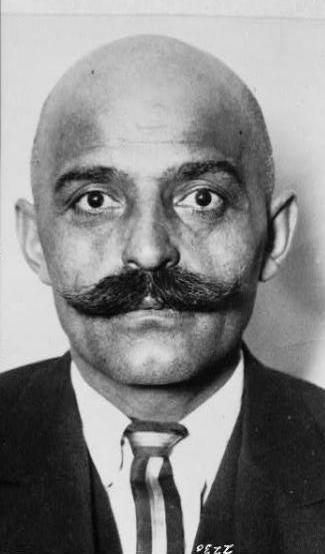
Georges_Gurdjieff

Gurdjieff

The concept I want to introduce is the Hegelian concept of ‘Geist’. When talking at a macro level about the rise and fall of civilisations or empires, the concept of Geist can be illuminating.

The point is that all national, religious and organisational success factors that can be identified by conventional study are secondary factors, the manifestations of Geist. The primary cause of success is Geist itself and the secondary factors are, in a sense, incidental. Even if an organisation possesses many of the factors that have made other organisations successful in the past, it will not be successful without Geist.

Continue reading →

The Fetishisation Of The Market

Filed under Economics, Politics

Regarding public good vs business good, Anna Minton’s book ‘Ground Control’ describes how the urban planning process has been distorted in recent years in favour of business and against the public interest. Large sections of our cities (e.g. Liverpool 1) have now been privatised in order to provide lucrative shopping environments. Undesirables (e.g. young people, old people, homeless people) are excluded through various means, such as the ASBO.

The fetishisation of the private sector knows no bounds. The current Neoliberal Party government is being warned that withdrawing investment from the public sector too quickly will deepen the recession, because the private sector is not ready to take up the slack. One reason for this is because the banks are failing to lend. The proposed solution is more ‘quantitative easing’ - increasing the money supply so that the banks have more money to lend. But the evidence so far shows that banks use any additional money in the system to fatten their own balance sheets and pay bonuses, not to lend, no matter how many times Vince Cable ticks them off.

Continue reading →

The Moral Economy

Filed under Economics, Politics

Opposition to neo-liberalism can be summarised under the heading ’the moral economy’. In a moral economy, human beings accept moral responsibility for what happens in the economy. We stop pretending that if everyone pursues their own selfish interest an ‘invisible hand’ is going to magically bring about our collective good.

Accepting moral responsibility does not entail taking control of every aspect of the economy. We can accept that, in some areas, properly regulated markets work reasonably well. However, the provision of universal public services should not be left to the market but should be performed by the public sector. Natural resources such as oil and metals belong to us all, and should not be left to small cabals to exploit and profiteer. We need to consume only as much oil as we need to create new renewable energy systems - the rest should be left in the ground if we want to have a future.

Continue reading → · 1 comment