Tag: God

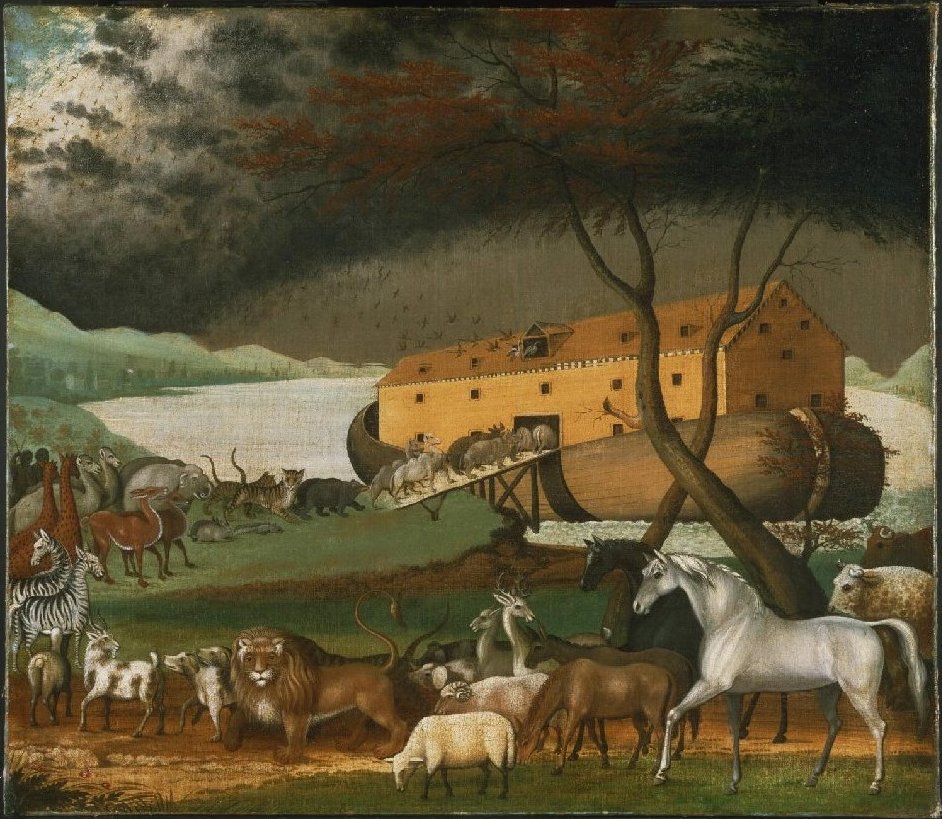
The Spiritual Journey of Noah

Filed under Islam, Religion, Spirituality, Sufism

This text is an English translation of a Khutba (sermon) given in Spanish by Sidi Hashim Cabrera, specifically Khutba 4 from the book ‘Khutbas of Dar-as-Salam’. The Quranic translations are by Muhammad Asad, but I have done the translation from Spanish myself and am responsible for any errors. I have left many of the key Arabic terms untranslated, as per the original sermon. A key term is ‘maqaam’ meaning ‘spiritual station’. Another key term is ’nafs’ meaning ‘soul’.

Continue reading →

Reflection on God's name 'Al Azim'

Filed under Islam, Religion, Spirituality, Sufism, Uncategorized

azim-crack-683x1024

Review of the chapter ‘Al Azim’ from the book ‘The 99 Names of God’ by Daniel Thomas Dyer

I find myself drawn to Allah’s names of majesty and wrath such as al-Azim, the Tremendous. Daniel chooses strong words and images on these pages: earthquakes, sinews, mountains, cracks and dust.

Through the cracks wrought by earthquake and mountain-splitting, there is always the leavening of light, which Daniel invokes using a Leonard Cohen quote. Daniel could have gone back to Rumi for the original but it is in the spirit of this wonderful book to embrace variety and diversity wherever possible.

Continue reading →

The Ninety-Nine Names of God

Filed under Islam, Religion, Sufism

Interior wall and dome ceiling of the Sheikh-Lotf-Allah mosque in Isfahan, Iran

Interior wall and dome ceiling of the Sheikh-Lotf-Allah mosque in Isfahan, Iran

The Muslim theologian Abdal Hakim Murad says “Sometimes we see in the world manifestations of the divine beauty and grace - and that’s preponderant - sometimes we see in the world manifestations of the divine rigour and wrath. And this is one of the big differences between our (Muslim) understanding and, say, the Christian understanding. The Christians say “God is love” and immediately they can’t explain the meningitis virus or whatever, and this is a major source of loss of faith amongst them.

Continue reading → · 1 comment

The role of conceptuality and reason on the spiritual path

Filed under Buddhism, Islam, Metaphysics, Philosophy, Psychology, Religion, Spirituality, Sufism

Lightning

Lightning

I want to offer a perspective on conceptuality and reason on the spiritual path. I will mainly draw on Buddhist source material, but will also include some references to Sufi Islam. In his ‘Root Text on the Mahamudra’, the first Panchen Lama, Losang Chökyi Gyaltsän, says

“The mind that is free from conceptualization Is merely a level of conventional mind; It is not the mind’s ultimate nature. Therefore seek instruction from qualified Masters.”

Continue reading → · 1 comment

Impractical Spirituality

Filed under Islam, Spirituality

babys_breath

The spirit is impractical. The spirit is of no use. It cannot be used. Any attempt to use the spirit contravenes its nature. Impractical spirituality is based on this recognition. Rather than try to use the spirit, impractical spirituality enjoys the beauty of spirit for its own sake.

To directly seek practical applications of the spirit such as ‘spirituality in the workplace’ is to miss the point. Sure, we can appreciate the beauty of the spirit anywhere: in the home, workplace, in the car, or on a plane – but attempts to put the spirit to use in those places are like trying to form water into a chair.

Continue reading →

At What Point Does the Gap Close Between God and Man?

Filed under Sufism

TPDSOG000024300

The concepts of Divine transcendence and immanence describe humanity’s relationship with God. They can be simplified to separation and proximity.

Listen to this reed as it is grieving; it tells the story of our separations. “Since I was severed from the bed of reeds, in my cry men and women have lamented. I need the breast that’s torn to shreds by parting to give expression to the pain of heartache. Whoever finds himself left far from home looks forward to the day of his reunion.”

Continue reading → · 1 comment

Fundamentalism and Interpretation

Filed under Religion, Sufism

Major religious figures such as the Buddha, Moses, Jesus and Mohammed revealed eternal truths in specific times and places. The truths they revealed must be understood within those contexts. We might prefer, if it were possible, to receive the eternal truth context-free, but then we would be even less able to relate it to our own lives and draw practical conclusions. Even though the world has changed since our great religious teachers, the basic context – being human – has not.

Continue reading →