Category Archives: Sufism

My Journey with Soul

My fascination with soul started in my teenage years with soul music, specifically black music. When I was eighteen I met a Sufi in Kashmir and asked him “do you understand the soul in music?”. He was playing a recording of what he described as ‘Kashmiri soul music’. His response was to read the ‘book’ in my heart and reveal an instruction to me. Through this revelation my felt need to develop soul was confirmed and made explicit, along with an instruction related to politics (hence the name of my blog).
Politics can be understood as the balancing and harmonising factor of soul. However, nowadays when people hear the word ‘politics’ they inevitably think of its shadow qualities. In the context of soul these represent the struggle of the soul to reconcile inner and outer conflicts and competing interests, and sometimes the corruption which results from such enormous challenges.
I was drawn to soul music because of its rawness, authenticity and spirituality. All of these were a relief and medicine for me as a teenager, growing up in a middle-class London environment where the mainstream culture was more repressed and my father had recently died. I loved the way soul music came from the heart – as someone whose education and milieu was all about coming from the head. I wanted to develop and embody soul qualities myself.
Following my meeting with the Sufi and some initiatory experiences soon after, my quest for soul took a more Eastern turn and I started to try techniques such as t’ai chi, yoga and meditation. At the time I had no concept of Sufism and I wasn’t drawn to Islam.
After leaving university I lived in a Buddhist retreat centre for a period and gained experience of meditation, which confirmed my belief in a soul imbued with imaginative properties, also characterised by compassion and connectedness. These are key aspects of the soul’s ‘politics’: it has transpersonal, expansive qualities and should not be considered narrowly individual.
Nowadays I experience my soul through Sufi meditation practices such as Dhikr and Sama’a and also through 5 Rhythms dance where I allow my soul to rip!
The Spiritual Journey of Noah
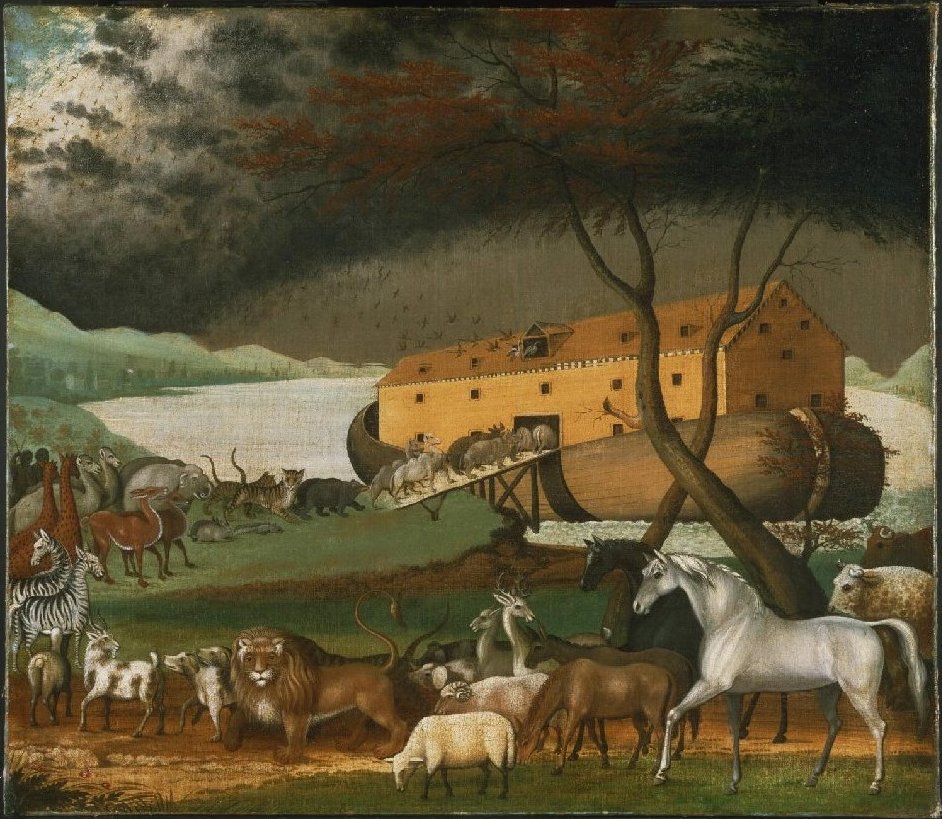
This text is an English translation of a Khutba (sermon) given in Spanish by Sidi Hashim Cabrera, specifically Khutba 4 from the book ‘Khutbas of Dar-as-Salam‘. The Quranic translations are by Muhammad Asad, but I have done the translation from Spanish myself and am responsible for any errors. I have left many of the key Arabic terms untranslated, as per the original sermon. A key term is ‘maqaam’ meaning ‘spiritual station’. Another key term is ‘nafs’ meaning ‘soul’.
The maqaam of Nuh [Noah], peace be upon him, is the beginning of the spiritual journey, of the interior voyage. It is the purification that our body needs to regain its natural luminosity. In this maqaam our Tahara is established, the deepest and most pervasive ablution or ghusl. This purification by water is the test that assays us, that prepares us, giving us the necessary strength and knowledge to be able to live the Revelation in our own being and thus be able to develop as conscious creatures.
Allah gives us form in the womb of our mothers. We evolve within the placenta, floating in nourishing, protective, hospitable water. In this way our Sustainer prepares us to receive light in the world of shadows where we must be born. In this maqaam, within our mothers, we experience another light, a light that is tinged with the blue of water, a light now screened by an animal skin, maternal and human.
According to Semnani, within our energetic body of light, the latifa related to this maqaam is called latifa nafsiya, and it is the subtle organ that governs the organic and vital soul, the sensing soul, the centre from whence surge the desires and passions. In the Qur’an it appears under the term nafs ammara, the commanding I (Sura 12, Aya 53). Of this nafs ammara Allah says, in relation to the human being, it “undoubtedly incites evil.” Is it the I of the senses, which lends credibility and reality to what our eyes see and our ears hear, and nothing more than that. It is the unconsciousness associated with entropy, it is a raw nafs, an unpolished I that overflows in waves without limit, which is always trying to find expression, the form it might be, a torrent of energy.
Our basic humanity is undergoing its test of maturity, the maqaam where the nature of our voyage is decided. Traditional medicine is very familiar with the purifying effect of this subtle center. To restore the energy balance lost by disease it is necessary to rid the belly of fire through cold water on the skin, causing a thermal reaction. The medicine of Nuh is a medicine of health as it works on the causes of chaos, of imbalance, which is always excessive fire, heat, inside of a human being who is essentially water. It is about restoring thermal equilibrium, levelling the balance between the internal and external through water. This tempers us, but we must be willing to withstand the cold on our skin during the journey.
It is precisely this nafs ammara, this impulse which overflows into chaos, toward entropy, that the Revelation of Nuh tries to redirect within us, initiating an inner journey that will transform us until, in the best case, as Allah wishes, we become a nafs motma’yanna, the calm soul that Allah gifts us in the Qur’an, in Surah Al Fajr:
“O thou human being that hast attained to inner peace! (28) Return thou unto thy Sustainer, well-pleased [and] pleasing [Him]: (29) enter, then, together with My [other true] servants (30) yea, enter thou My paradise!” (Qur’an, Sura Al Fajr, verses 27-30)
To make the voyage through this night of chaos, from the darkness of the senses to the luminous perception of Fajr, of the spiritual dawn, of Ishraaq, it is necessary to understand the deep meanings of the revelation of Nuh, peace be upon him, to understand the purificatory meaning of conscious servanthood and submission to Allah.
Desire is life and life is heat that expands. Humans distract ourselves with the names and this distraction ends up altering our own sensibility. Our senses don’t only get drunk on chemical substances but are intoxicated by thoughts and images, and so our experience is degraded. We became a turbid consciousness, possessed of insufficient clarity to distinguish between what we’re seeing and what, without control, we imagine and project. Our heat stops expanding and gets locked inside, and our skin is cooled. We experience a walled-up combustion in the belly, an imprisoned energy in a moulded, permeable body of clay.
Turbidity is a resistance to the passage of light through water. They are impurities, ashes of light, but they are also living organisms because water is the placenta of our Earth. Life arises and grows like a light passing through the water, a white light that reveals blue bands, luminous blue, fluid and undulating. Interestingly they are the same symbolic colours that Christianity assigns to the Immaculate Conception. Light passing through the waters is the Revelation that Allah performs through His messengers, peace be with them. In this case Nuh, who brings the revelation of our spiritual birth, our first experience as creatures in a state of submission and as believers, as muslims and mu’mins, Alhamdulillah.
Adam became the first muslim when he submitted to Allah by making Tauba to Him. Nuh is the first mu’min because he is the first human to feel an inner recitation, a certain Revelation from Allah, an awareness of the Real in his heart. Nuh, peace be upon him, warned his people and pointed the way to submit to Allah, to worship Him, trying to bring them into the light, to show them Tawhid, but the dignitaries refused to acknowledge the truth and they fought against him, like all the prophets after him, with the same or similar arguments: “this man is nothing but a man like yourselves … if Allah had wanted to convey a message he would have performed miracles,” etc.
In ‘Sura Al Mu’minoon’ we find Nuh receiving the Revelation while feeling the rejection of his people: 23:26 Said [Noah]:
“O my Sustainer! Succour me against their accusation of lying!” (23:27) Thereupon We inspired him thus: “Build, under Our eyes and according to Our inspiration, the ark [that shall save thee and those who follow thee]. And when Our judgment comes to pass, and waters gush forth in torrents over the face of the earth, place on board of this [ark] one pair of each [kind of animal] of either sex, as well as thy family – excepting those on whom sentence has already been passed -; and do not appeal to Me [any more] in behalf of those who are bent on evildoing – for, behold, they are destined to be drowned! 23:28 “And as soon as thou and those who are with thee are settled in the ark, say: ‘All praise is due to God, who has saved us from those evildoing folk!’ (23:29) “And say: ‘O my Sustainer! Cause me to reach a destination blessed [by Thee] – for Thou art the best to show man how to reach his [true] destination!'” 23:30 In this [story], behold, there are messages indeed [for those who think]: for, verily, We always put [man] to a test.” (Qur’an, Sura Al Mu’minoon, verses 26-30)
Certainly there are many messages in this story. One of these is the crude expression of a fracture in humanity. Internal division forms part of the creation of the human being who, upon being made a confidant in the names of things, apparently loses Tawhid in the stare of the other but may be redirected through the consciousness of Allah, through the Tawhid of islam and iman up to the unitary and elevated light of ihsan. The wound may be closed but we must preserve awareness, cultivate it, because consciousness cannot be imposed but arises and grows in the nucleus of the human heart. But there are people who are refract the Light, who are closed to His message.
Allah, Subhana wa Ta’ala, wants to purify the community and admonishes Nuh, telling him not to plead for those who are bent on denying the truth and on evil-doing. On these has already been rendered judgement, precisely because their hearts have been closed and sealed. Nuh pleaded for them not out of naivety but out of compassion and kindness, out of the desire that all souls might be saved; not for nothing his mission was to build a ship and save the entire animal soul: a pair of animals of each species and his own human family. The surviving human being survived complete with his animal soul, organic and functional, but now it is a soul tested with submission to Allah and comforted with His Protection, with His aman [sic]. Whosoever can’t endure the test doesn’t just remain veiled to Reality but also his vital soul fades prematurely until it stops fluttering.
Nuh receives the Revelation while feeling the rejection and hostility of his own people, his own family. The maqaam of Nuh is the journey that we have to make from maqaam to maqaam, from prophet to prophet, until the luminous circle of Revelation is complete, crossing the great waters, the toughest circumstances. Along the way we acquire a spiritual force that arises in us and makes us mu’minoon, while we are immersed in adversity, feeling hostility and resistance from others and from ourselves.
Sailing in the ship of Nuh implies transcending the names, concepts and images, transcending one’s own vision. This navigation of light, crossing the great waters, feeling the moisture on our skin, is the first happening of the soul, the nafs, its first experience of the luminous and subtle world. It is the time when Allah blows Suruh [sic] into the gestating being and grants the dignity of being truly human. From this moment Allah is preparing us to face the moment of our earthly birth, the passage from the water world to the world of air, so that we may finally pass through the skin of our mothers. From that transcendental moment the ship sails on the waters against the current, scanning the horizon outside, trying to find the source from whence arise the waves and tides of appearance, until it finds calm.
It is the ‘hero’s journey through the night’ that Carl G. Jung describes to refer to the journey of consciousness through the dark sea of the human unconscious. It’s the return of Ulysses to his homeland on board a boat to whose mast he is tied: the hero’s ears are sealed with wax so that the Jinni do not distract him from his return and do not make him mad. But Nuh, peace be upon him, cannot cover his ears because it is Allah who talks to his heart and reveals the du’a that all who dwell in this maqaam must say. Nuh neither wants nor is able to cover his ears because he is a true prophet, the first of the messengers after Muhammad, peace be upon them. Because the soul of Muhammad was created before that of Adam and because in the Qur’an of Muhammad are all our du’as:
“O our Sustainer! Make us arrive at a destination blessed by You, for it is You who best shows man how to reach our true destiny! Amin”
The maqaam of Nuh brings us awareness of our voyage, of its scope and meaning. It is the awareness of our condition in the face of Reality. We submit or rebel. There is no half-stepping. The waters flood in and there is no longer any time for repairs. Those who climb into the boat of consciousness are saved, unbelievers inevitably drown because they are veiled with the things of the world, with their names and images, and do not realize that the waters overflowed a while ago. And this is what we perceive when we sail in this boat of the mu’minoon . . . we feel the desperate expressions of the unbelieving like a fire in the belly and our skin feels a chill, because we are human and we are affected by everything that affects humanity and creation.
Not only do we mu’minoon not cover our ears but we heed these desperate cries and see in them the expression of the immense power of Allah, Subhana wa Ta’ala, that does what it wants with the human heart. But we mu’minoon have already boarded the ship and we listen attentively to the recitation of Nuh:
“(11:41) So he said [unto his followers]: “Embark in this [ship]! In the name of God be its run and its riding at anchor! Behold, my Sustainer is indeed much-forgiving, a dispenser of grace!” (11:42) And it moved on with them into waves that were like mountains. At that [moment] Noah cried out to a son of his, who had kept himself aloof [from the others]: “O my dear son! Embark with us, and remain not with those who deny the truth!” (Qur’an, Sura Hud, verses 41-42)
The caliphate, the realization of the promise of Allah in the human being, began its evolution in the ship of Nuh. It Is the first caliphate of the ummah because until that point the community had lived without guidance or direction, it was just a vital humanity abandoned to an irreversible dissolution, to entropy, gone astray through language. Then Allah arouses a luminous khalifa in us, a prophet who will guide us through the trial, who will purify us until we arrive at a doorway where every member of our community will eventually become a khalifa of Reality, a khalifa ullah. The mu’min navigates by the name of Allah and moors the ship with His name. This is the ship of fools [. . .] of Allah, of the enlightened who are saved because they feel that everything depends on His power, because they discover His compassion and His light in every heartbeat, Alhamdulillah.
Nuh, peace be upon him, is sailing with us as we listen to the Revelation that Allah is performing through him. The Nuh of our being is the consciousness of our essential vitality and the urgent need to purify ourselves, to separate the coarse from the subtle, to restore our balance in the world. It is the maqaam of the overall health of our body, because it is the balance of light in water, the key to the balance between the internal and the external, a corporeal manifestation of our submission.
We are created from a qutb, from an axis that opens up an intense polarity until there is a splitting into pairs of our kidneys and glands which, for balance, are required to compensate for the heat and the entropy in the midst of water. And all this leads to different states, maqaams which are like these giant waves that the Quran describes. The Revelation of Nuh, peace be upon him, makes us voyagers through the maqaams, pilgrims from light unto Light. Alhamdulillah.
Nuh carries us across the great waters, guides us in the night sea. He shows us the compass indicating the direction of our journey, our qibla. Such guidance is not, in this case, to the geographical east or the east of the Orientalists, but to the east where the Light of lights dawns, towards the Ishraaq. Nuh takes us from the west of the shadows, from the twilight of fire, darkness and ignorance.
During his journey in this maqaam, Suhrawardi witnessed the appearance on the horizon of the Star of Yemen, Suhail or Canopus, which rises “on some wispy clouds woven by the spiders of the elemental world, in the world of generation and dissolution.” The Star of Yemen points us to the east of spiritual dawning, the direction in which the Fountain of Life is found.
It was this bright wink which Muhammad felt, peace [and blessings] be upon him, when he said, “I feel the Breath of the Merciful coming from the direction of Yemen.” The Prophet, peace be upon him, was referring to the spiritual light of his contemporary gnostic who lived in that land, a salih called Oways al Qarani who knew him without ever having physically seen him, and whom the prophet also knew in the same way. Oways had no visible human teacher but this didn’t stop him from feeling the Guide inside him. For that reason seekers without a visible guide call themselves owaysis.
The appearance of the Star of Yemen during the spiritual journey means that we have already abandoned the west of the shadows, that now we are crossing over to our true destination which is none other than the Fountain of Life, the Light that is neither from the east nor the west and which burns without having been touched by fire. Light upon Light. Allah, Subhana wa Ta’ala, enlightens whom He will.
Allahumma: Draw us to Your presence in the ship of Nuh. Oh Allah: We are grateful for the wisdom that is hidden in Your trials. We ask strength, courage and dedication to live in the maqaams that You decree for us. Make us understand the luminous meaning of our difficulties, show us the Star of Yemen. Amin
Reflection on God’s name ‘Al Azim’
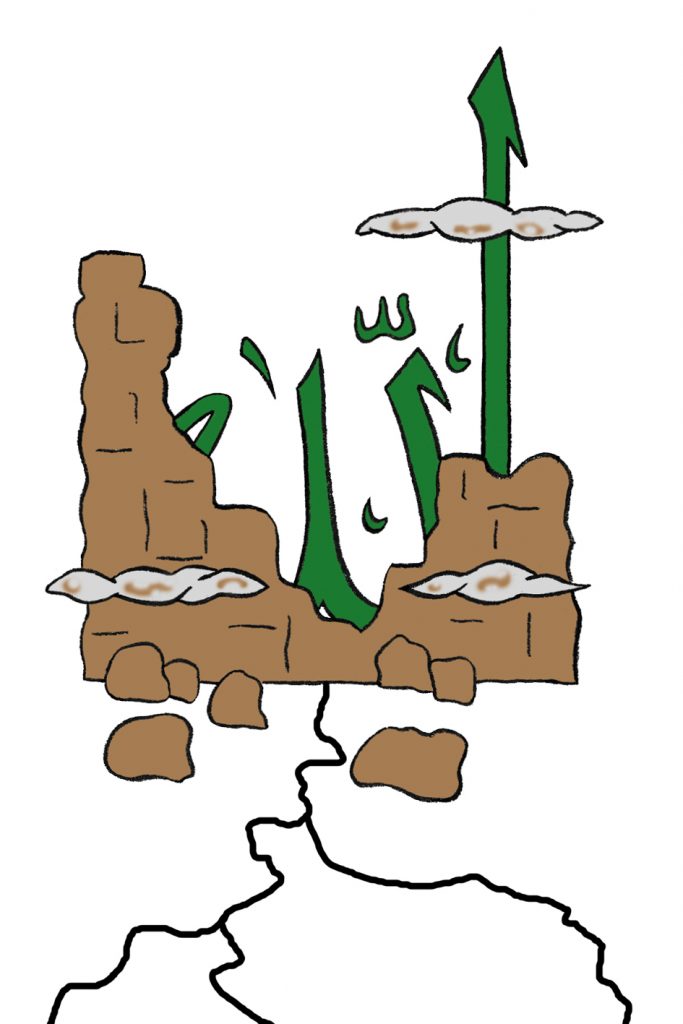
Review of the chapter ‘Al Azim’ from the book ‘The 99 Names of God’ by Daniel Thomas Dyer
I find myself drawn to Allah’s names of majesty and wrath such as al-Azim, the Tremendous. Daniel chooses strong words and images on these pages: earthquakes, sinews, mountains, cracks and dust.
Through the cracks wrought by earthquake and mountain-splitting, there is always the leavening of light, which Daniel invokes using a Leonard Cohen quote. Daniel could have gone back to Rumi for the original but it is in the spirit of this wonderful book to embrace variety and diversity wherever possible.
Just as light brightens cracks, the book reminds us how the awe expressed in the Prophet Muhammad’s earnest prayer of submission was softened, by his allowing his beloved grandsons Hassan and Hussein to climb and play on him as he prayed.
Meditating on Daniel’s picture of a wall destroyed by an earthquake to reveal the name ‘Allah’ behind, I recall the Hadith Qudsi “I am with those whose hearts are broken for My sake” and I dig out these words of Rumi: “Wherever there is a ruin there is hope for a treasure – why do you not seek the treasure of God in the wasted heart?”
I recall the powerful idea of being broken (shikast) as an initiatory stage on the path to God, which seems closely related to al-Azim. Daniel echoes the question from the Qur’an: Who could give life to bones that have crumbled to dust? It will be inspiring for readers to contemplate the answer.
I think that The 99 Names of God by Chickpea Press is a tremendous achievement, and I hope it will bring light and hope to many people.
The Ninety-Nine Names of God

Interior wall and dome ceiling of the Sheikh-Lotf-Allah mosque in Isfahan, Iran
The Muslim theologian Abdal Hakim Murad says “Sometimes we see in the world manifestations of the divine beauty and grace – and that’s preponderant – sometimes we see in the world manifestations of the divine rigour and wrath. And this is one of the big differences between our (Muslim) understanding and, say, the Christian understanding. The Christians say “God is love” and immediately they can’t explain the meningitis virus or whatever, and this is a major source of loss of faith amongst them.
“Now we say that Allah is indeed Rahman [intensely merciful] and Rahim [most compassionate] and He is Al-Wadood [the loving], and He has those beautiful attributes and they do predominate and at the end, when good and evil are finally differentiate, we will see that the Rahma [divine mercy] predominates over the divine wrath. Nonetheless we also believe that Allah is Al-Jabbar (The Overwhelming), Al-Muntaqim (The Avenger), The Judge (Al-Hakkam), and that’s one reason why Islamic theology hangs together so well when confronted by the paradoxes of evil and suffering in the world. We believe that the world is the endlessly subtle interaction of ninety-nine names that includes names of rigour as well as names of beauty.”
“. . . which also means that the perfected human being, the Adamic human being, sometimes (and predominantly) manifests mercy and forgiveness, but sometimes can manifest rigour as well, which is why the Prophet (saws) forgave the people of Mecca, but he also went to war against them. Because he is the true Khalifa, he has those names and he also has within himself something of the Rahma, and he has within himself something, also, of Al-Muntaqim (The Avenger).
“The true representative of Allah (swt) on earth is not just the woolly-minded, kind, benevolent saint who always turns the other cheek, but sometimes has to uphold Allah’s rule in the world through those names as well, and that’s part of the completeness of Sayyedina Muhammad (saws), that in him we can see manifested (so far as is possible for created mortal human beings) all of the names of Allah, not just the names of beauty and the names of mercy.”

Humanism and Religion – part 2
The principal reason why some religious teachers are not humanistic is because they distrust human nature and have a pessimistic view of human beings. These religious teachers tend to downplay the humanity of the founders of their religions, emphasing their superhuman or even divine qualities.
Traditional Christianity teaches that due to our Fall from the grace of Eden, humanity is in a state of sin and that this original sin passes from one generation to another as part of our human nature. The only redemption is considered to be through Christ, whose nature is believed to combine divinity with humanity. Therefore traditionally Christians were encouraged not to rely on or trust their corrupt human nature but instead to rely on the divine Christ their saviour.
In Buddhism there are different understandings of how human Gautama Buddha was. While all schools accord him a special status as the ‘wheel turning’ Buddha who presented the Dharma (doctrine/law) for his age, some schools play down the significance of his own human struggle in this life, claiming that he was already an enlightened being at birth and that he merely ‘manifested’ his actions of ascetism followed by meditation under the bodhi tree as a kind of act.
There is a strand in Buddhism which distrusts human nature on the grounds that it is ‘samsaric’, the karmic product of impure causes and conditions, and contends that to achieve the ultimate fruits of the spiritual path we must abandon our ordinary human bodies and impute ourselves instead on subtle bodies of light. While developing and associating with our higher energies and potentials is surely a good thing, there can be a danger that practitioners will distrust and become alienated from their normal human urges and energies, which would not be a humanistic approach.
Unlike Christianity, Islam has a fundamentally positive attitude towards human nature. Muslims believe that, although Adam and Eve fell from the garden, their human nature was not corrupted or tarnished. Therefore there is no original sin passed from one generation to the next. Instead, Muslims believe that everyone is born with their basic purity (fitra) intact and it only through the vagaries of our upbringings and the difficulties of the world that we develop sin and alienation. Because of this basic postive view of human nature Islam does not require renunciation of the body. Therefore “there is no monasticism in Islam” unlike in Christianity and Buddhism. Bodily urges such as sexual desires are considered fundamentally healthy and to be enjoyed within “marriage [which] is half of the religion”.
No Muslim would claim that the Prophet Muhammad ﷺ was divine, because the fundamental tenet of Islam is that “there is no god but God, without partners”. Muhammad is considered fully human, the best of creation, and a perfect model for believers. God said to Muhammad ﷺ “but for you I would not have created the world” because Muhammad, as the perfect human (al-Insan al-Kamil), is most able to appreciate God’s truth, beauty, and love.
Through emulating and loving Muhammad ﷺ, Muslims are able to share in his grace and experience something of the truth, beauty, and love he experienced. This is why the following story of Muhammad ﷺ and his companion ‘Umar (later the 2nd Caliph) is recounted: “We were with the Prophet and he took the hand of ‘Umar b. al-Khattab. ‘Umar said to Him, “O Messenger of God, you are dearer to me than everything except my own self.” The Prophet said, “No, by Him in Whose Hand my soul is, (you will not have complete faith) until I am dearer to you than your own self.” Then ‘Umar said to him, “By God, it is now that you are dearer to me than my own self.” The Prophet said, “Now, O Umar (your faith is complete).”
The point here is that the Muhammadan nature is the essence of human nature, and that by embracing this nature we fully embrace our humanity and are able to experience all its peace and blessings. We do not need to deny our humanity, but we do need to efface our normal, limited sense of self in order to achieve closeness to God, and become like his beloved.
To efface ourselves in Muhammad ﷺ we need to transcend our personality but not our humanity because Muhammad ﷺ is the epitome of humanity. Also, because Muhammad ﷺ was suffused with light (noor) we will find that, by cherishing him, our humanity becomes suffused with light and takes on a higher quality.

Humanism and Religion
It is possible to be both religious and a humanist. For me, humanism means attributing weight and importance to the individual human experience. Historically, some religious practioners have neglected the individual experience of themselves and others, preferring to prioritise the literal religious doctrine in all circumstances. However there is not necessarily a contradiction between religion and humanism.
An example of a non-humanistic approach to Buddhism would be to treat all individuals like pebbles on a beach and, rather than consider their own individual circumstances, encourage them simply to adhere to Buddhist doctrine in the expectation that it will resolve their problems. On the other hand, a humanistic approach would encourage the practice of meditation as a form of compassionate, internal listening, a pre-requisite for the sensitive integration of Buddhist teaching in your life.
In Islam, the Qur’an contains the verse “We will show them Our signs on the horizons and within themselves until it becomes clear to them that it is the truth.” (Q41:53). The Arabic word for ‘signs’ is also used to refer to Qur’anic verses themselves. Therefore we can understand that in Islam there are three principal loci of revelation: the natural world (‘horizons’), the psyches of individuals (‘within themselves’) and the Qur’an.
In recent years there have been movements in the Islamic world to reconcile modern understanding of the natural world (science) with Qur’anic revelation, and there is also a long-standing humanistic current in Islam which reconciles individual psychology with revelation. For example, the 13th century poet Rumi was both steeped in Qur’an and sensitive to individual experience, comparing the human psyche to a guest house and suggesting that we (the hosts) treat all our guests (cognitive, emotional & spiritual states) with kindness and respect.
“This being human is a guest house.
Every morning a new arrival.
A joy, a depression, a meanness,
some momentary awareness comes
as an unexpected visitor.
Welcome and entertain them all!
Even if they are a crowd of sorrows,
who violently sweep your house
empty of its furniture,
still, treat each guest honorably.
He may be clearing you out
for some new delight.
The dark thought, the shame, the malice.
meet them at the door laughing and invite them in.
Be grateful for whatever comes.
because each has been sent
as a guide from beyond.”
— Jelaluddin Rumi,
translation by Coleman Barks
Sufism: traditional, modern, and post-modern

Ludwig Wittgenstein
I want to posit that the jump-off point between modern and post-modern philosophy is Ludwig Wittgenstein’s notion of language games. His point is that there are multiple human language games in operation simultaneously; each language game functions to establish a different type of truth, and the truth established by one language game may have only limited relevance to the truth established by another.
Science is a key language game. In the modern era the truths established by science have swept all before them and proponents of scientism claim that science has a monopoly on truth. However, in the post-modern era Wittgenstein’s notion of language games provides breathing space for other types of truth e.g. ethics; aesthetics; and religion.
Regarding ethics, in the modern era David Hume’s statement that “an is does not justify an ought” severed the link between scientific understanding and ethical imperative: science can describe what is, but we can make no clear inferences about what we ought to do from scientific understanding.
Wittgenstein’s point is that just because scientific truth does not speak to ethical truth does not mean that ethics have disappeared, merely that they are a discrete language game that we need to play on their own terms; likewise aesthetics and religion.
If we look at W’s insight in regard to religion we can see that it negates the need for modernisation of religion, a project that has gained significant momentum since the 19th century. (NB. This doesn’t imply that religion should be fossilised, unchanging, or immune to social criticism).
Under the onslaught from scientism, religious modernisers have sought to dispense with all that is ‘superstitious’ or supernatural and metaphysical in religion (e.g. heaven, hell, angels, miracles) and place it in on a rational, scientific basis. In doing so they have made a fundamental category error, thinking that there is only one type of truth in town (scientific) when in fact there are many.
Scientific truth and religious truth have quite different characteristics and purposes: the purpose of science is to find publicly demonstrable (objective) truths that can explain physical / external phenomena; the purpose of religion is to demonstrate eternal truths to the consciousness (subjective) of individuals and groups so as to bring us to salvation / liberation. There may be little overlap between these two enterprises or language games. Note that the vast majority of people who have achieved liberation / salvation in human history have been ignorant of science and its truths.
For those of us living in the West it is impossible to revert to pre-modern, traditional Sufi perspectives. The alternatives are modern or traditionalist approaches to Sufism. Whereas modern Sufism makes significant concessions to the predominant Western, modern language games of science, rationalism and individualism, and is therefore at risk of de-naturing Sufism, I argue that the traditionalist approach need make no such concessions.
Traditionalism is highly compatible with post-modernism because it accepts that the force / truth of religion derives largely from its narrative structure, enveloping adherents in its myths, and thereby re-orienting them towards the Divine and eternal.
Moreover, a traditionalist who is conscious of post-modernism is able to participate simultaneously in multiple language games: through the force of faith and imagination they can commit themselves fully to traditional Sufi narratives / myths while also being able to participate in scientific / rationalistic language games. There may be little overlap between these games, but there may also be little conflict, depending on the context.
The difference between the post-modern traditionalist Sufi and the pre-modern traditional Sufi is the post-modern characteristic of ‘knowingness’: the ability to consciously step between narrative frameworks / language games. In the post-modern world we can be fluent in multiple language games: we don’t have to put all our eggs in one basket. The scientific language game provides some truths, the religious provides others. If we are working on medical hygiene we will use the scientific framework; if we are working on our salvation we will use the religious framework. It would be a mistake to dispense with either.
Sufism And The Two Truths

Two key concepts in Sufism are ‘fanaa’ and ‘baqaa’ meaning annihilation and subsistence in Allah. These root words appear in the Qurʾān. “Everyone upon the earth will perish (fānin), and there will remain (yabqá) the Face of your Lord, Owner of Majesty and Honor.” (Surat al-Rahman 55:26-28). In Sufism, ‘fanaa’ refers to the annihilation of the individual ego or self (‘nafs’) in Allah and ‘baqaa’ refers to whatever is left, remains, or subsists once the ego has been annihilated. In this short piece I want to use the Mahayana Buddhist doctrine of the two truths to help explore the concepts of ‘fanaa’ and ‘baqaa’.
The two truths are revealed in the Buddhist ‘Heart Sutra’ which states: “form is empty, emptiness is form.” Form and emptiness stand for the two truths: conventional truth and ultimate truth. In the terms of the verse from Surat al-Rahman, the ultimate truth (‘fanaa’/emptiness) is the fact that only Allah is Real and that everyone else “will perish” while the conventional truth (form) is “everyone upon the earth”. The annihilation of form to reveal emptiness is known as the ‘first profundity’ and it is revealed in the words “form is empty” and “Everyone upon the earth will perish (fānin)“.
The second profundity is revealed in the words “emptiness is form” and “there will remain (yabqá) the Face of your Lord, Owner of Majesty and Honor“. In ‘Heart of Wisdom’ Lama Geshe Kelsang Gyatso writes “Whereas the first profundity of a phenomenon is the phenomenon’s emptiness . . . the second profundity is the phenomenon’s being a manifestation of emptiness.” This means that, once everyone has been annihilated in emptiness, any phenomenon that appears must be a manifestation of emptiness. Geshe Kelsang offers two analogies to illustrate this, the gold coin and the blue sky: “The underlying nature of the coin is gold; it is the gold itself that appears in the form of a coin. Clearly, the coin that appears to us is not separate from its gold and could not exist without it. We can say therefore that the coin is a manifestation of its gold . . . [likewise] a sky that is completely clear appears to us as blue. We know that the actual nature of the sky is merely empty, just as the space around us is empty. Although the sky appears to be a blue canopy, if we travel towards it we shall never encounter a blue object; there is only space. Nevertheless, when we look at the sky we see blue and we point to this blue as being the sky. We can say therefore that the blue we see directly is a manifestation of an empty sky. Thus, from an empty sky, blue manifests. Similarly, from the emptiness of form, form manifests.”
Created objects that appear to the mind following ‘fanaa’ are conventional truths: they are true because they are recognised as having no existence from their own sides being utterly dependent on the Creator, but they are not ultimate truth because they are not the Creator. Strictly speaking, objects that appear to the mind before ‘fanaa’ are neither conventional nor ultimate truths rather they are falsities because the ego mistakenly believes that they exist from their own sides independently of the Creator, like idols that need to be smashed.
Metaphysics of Light

Before light there was Light –
invisible, previsible.
Moses asked to see the Light
but how could he see with eyes?
Light beyond light,
Light beyond eyes.
Light’s mercy was to create shadow
so that we might see light –
a pale, obscure, wavering reflection.
Light’s mercy was to create eyes
so that we might see yellow, red and blue.
Light’s mercy was to create green
so that we might see Beauty.
Hashim Cabrera advances Sufi metaphysics of light and colour in his book ‘Ishraq’, available for free download in Spanish via Webislam, the leading Spanish language Islamic website. I was fortunate to meet Hashim last week near Cordoba, and the following summary is based on the explanation I received from him. My poem above is inspired by Hashim’s metaphysics.
One of the 99 names of Allah is ‘Nur’ meaning Light. The absolute or pure Light which is Allah cannot be perceived directly by created beings. Moses asked if he could see Allah, but Allah did not show himself directly to Moses, instead he appeared to him via the burning bush. The flames of the burning bush were yellow, which is the first colour in which light appears to created beings, like the rays of the sun. In order to be perceived Allah created the universe, where light can appear against the darkness.
The three fundamental colours are red, black and white. In Surah Fatir verse 27 Allah (swt) says “among the mountains are streaks white and red, of varying colours and (others) very black”. A meteorite goes through three stages: it is bright white in space, burning red as it enters the atmosphere, and charred black when it comes to earth. Black, white and red also mark the three alchemical stages of nigredo, albido, and rubedo. Red contains all of the other colours in potential form. One of the Spanish words for red is ‘colorado’ which just means ‘coloured’.
The physical primary colours are blue, red and yellow. Green is not considered a physical primary colour because it is composed of blue and yellow. However, from the point of view of perception, green is a basic component of our perceptual field, as in the RGB screen palette. Hashim believes that the ambiguity of green’s status is no accident, indicating its status as the liminal colour, demarcating the physical and spiritual worlds.
Hashim’s research into the Sufi chakra system (latifa) of the Ishraqiya school bears this out (see Henry Corbin, ‘The Man of Light in Iranian Sufism’). In Sufism, the seven chakras are each associated with a colour and a prophet. The chakra at the anus is associated with the black of the ‘materia prima’ or ‘negredo’ and is associated with Adam (as) who was fashioned from clay. The navel chakra is associated with the blue of water and the emotions and is associated with Nuh (as). The chakra at the solar plexus is associated with the colour yellow and the prophet Dawud (as). It is where the spirit enters us, as recognised in the Chinese and Japanese notions of ‘Dantian’ and ‘Hara’. Dawud (as) was renowned for receiving divine inspiration which caused him to sing the Psalms. The heart chakra is associated with the colour red and the prophet Ibrahim (as). The expansive heart chakra experiences emotions such as love and vulnerability. The throat chakra is associated with black light and the prophet Isa (as) who represents the divine word or logos and the power of miraculous speech. The 3rd eye chakra is associated with white light and the prophet Mousa (as) who wanted to see the pure Light of Allah.
The crown chakra is the mountain of emeralds, associated with the colour green and the prophet Muhammad (saws). The crown chakra is where our personal soul (nafs) and the transpersonal spirit (ruh) meet. It is where the spiritual realm transcends the physical body. Green shows this juncture or transition. Muhammad (saws) guides the way to the divine and is the summit of all the prophets. Though the absolute Light of Allah cannot exist in the created world, our eyes are lifted to behold Allah’s Beauty via the green nur of Muhammad (saws).
Sufism and Quakers

Quaker meeting
I am a Muslim who sometimes attends my local Quaker meeting. In England, Quaker meetings offer unstructured worship where one sits in silence until someone feels moved to speak. In my local meeting I can generally enjoy 30 mins of silent meditation or dhikr until someone speaks. In the silence, Quakers wait on God “as if none were present but the Lord” and the metaphors they commonly use to describe God are spirit and light, which map to the Sufi concepts of ruh and noor.
The ‘Quaker Faith and Practice’ book which sets out the current rules for Quakerism in England says that you need to be “broadly Christian” to be a Quaker (i.e. to be a member of The Religious Society of Friends which is the English Quaker congregation). However, many Quaker meetings (including my local one) make no distinction between members and regular attenders. There is no requirement for an attender to be Christian, as long as one is “in sympathy” with the meeting.
In fact, I have found a number of Quakers to be in sympathy with Sufism. One lady at my local meeting is planning a return trip to Konya after a moving visit. She asked the Sufi brethren who were her guides in Konya to take her to Rumi’s mausoleum but they insisted on taking her to Shams first. Soon after arriving at Shams’ tomb she was overcome by emotion and found herself kneeling on the floor weeping! However, when she was taken to Rumi’s tomb she found it quite ordinary in comparison. When she asked the Sufi brethren why, they asked her “where do you think Rumi is?” In death there is nothing to keep Rumi apart from Shams so Mevlana can be found at the tomb of his friend.
 Politics of Soul